
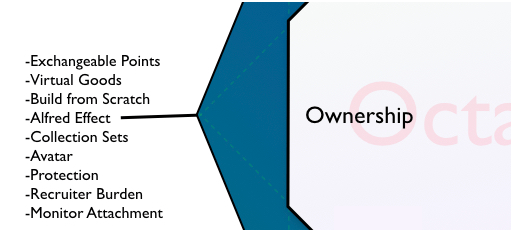
Image from https://yukaichou.com/gamification-examples/octalysis-complete-gamification-framework/
In the high-stakes environment of chemical processing plants, where safety is paramount, employee engagement and responsibility are essential. The Octalysis Framework, created by gamification expert Yu-kai Chou, offers a unique perspective on this challenge. Particularly relevant is the core drive of “Ownership & Possession.” This blog post explores how this principle can enhance chemical processing plants’ occupational health and safety processes.
Understanding “Ownership & Possession”
“Ownership & Possession,” a core drive in the Octalysis Framework, focuses on the human desire to own, control, and collect things. It encourages a more profound, personal investment in safety practices in a chemical processing plant context.
- Personal Safety Metrics: Implement a system to track employees’ safety metrics, including records of safety checks completed, training sessions attended, or incident-free days. Personal dashboards or apps can facilitate this, giving each employee a clear view of their safety contributions.
- Safety Achievement Badges: Introduce a badge system for safety milestones. For example, an employee could earn a “Safety Expert” badge after completing several training modules. These digital or physical badges become collectible items that signify expertise and commitment.
- Safety Committees and Leadership Roles: Create safety committees or assign safety leadership roles to employees. These roles, which can rotate, give workers a sense of ownership over safety protocols and decisions, encouraging more active participation.
- Customizable Safety Tools: Allow for some customization in safety equipment or tools. For instance, letting employees choose the color of their safety helmets or personalize their safety gear can increase their sense of ownership.
- Safety Improvement Points: Develop a points system where employees earn points for engaging in safety-related activities, such as identifying potential hazards or suggesting improvements. Points can be exchanged for privileges or points, further incentivizing safe behavior.
- Team Safety Challenges: Organize team safety challenges or competitions. Rewarding Teams for achieving specific safety goals or innovative safety initiatives, promoting a sense of ownership, and fostering team spirit and collaboration.
The Impact of “Ownership & Possession”
Applying “Ownership & Possession” to occupational health and safety can have several positive outcomes:
- Enhanced Safety Engagement: Employees feeling a sense of belonging and ownership are more likely to be engaged and proactive in safety practices.
- Increased Responsibility: Personal tracking and rewards make safety a personal responsibility, not just a corporate mandate.
- Positive Safety Culture: This approach cultivates a culture where safety is considered valuable and integral to each employee’s role.
Conclusion
Integrating the “Ownership & Possession” core drive from the Octalysis Framework into a chemical processing plant’s occupational health and safety processes can transform how employees interact with safety protocols. Employees become active participants in creating and maintaining a safe work environment by fostering a sense of ownership, enhancing compliance with safety standards, and building a robust culture where safety is personally valued and continuously improved upon. In this way, safety becomes a rule and a personal asset to cherish and enhance.
To learn directly from Yu-Kai’s site:
The information in this article was partially generated by OpenAI’s ChatGPT, an AI language model, and has been reviewed/edited for accuracy and relevance. OpenAI. (2024). ChatGPT [Large language model]. Retrieved from https://chat.openai.com/



 Wee Write
Leave a comment