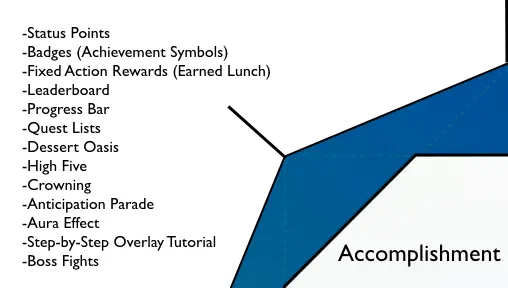
Image from https://yukaichou.com/gamification-examples/octalysis-complete-gamification-framework/.
Introduction:
In environmental management, particularly within the context of chemical processing plants, implementing gamification strategies can bring about transformative changes. This blog post delves into applying the “Development & Accomplishment” core drive from Yu-kai Chou’s Octalysis framework to enhance Environment Management Systems (EMS) in chemical processing facilities. We explore how this principle can motivate employees, promote sustainable practices, and lead to tangible environmental achievements.
Understanding Development & Accomplishment:
The “Development & Accomplishment” core drive is a crucial component of the Octalysis framework. It focuses on empowering individuals with a sense of progress, mastery, and achievement. In a workplace setting, it’s about creating an environment where employees feel constantly growing and overcoming challenges.
Application in Environmental Management:
- Setting Clear Environmental Goals: Establish specific, measurable, achievable, relevant, and time-bound (SMART) environmental goals. This might include reducing waste, lowering emissions, or improving energy efficiency. By setting clear targets, employees can see a direct line from their actions to the achievements of these goals.
- Progress Tracking and Feedback: Implement systems to track and display progress towards these environmental goals. Real-time feedback mechanisms, such as digital dashboards, can show employees the immediate impact of their actions, fostering a sense of accomplishment.
- Skill Development and Training: Provide training and development opportunities related to environmental management. This could be workshops on sustainable practices, certifications in green technologies, or cross-functional training. As employees grow their skill sets, they feel more competent and motivated.
- Rewards and Recognition: Recognize and reward environmental achievements. This could be through formal award systems, public acknowledgments, or tangible rewards for meeting or exceeding ecological targets. Such recognition not only celebrates accomplishments but also sets a precedent for the importance of environmental goals.
- Challenges and Milestones: Introduce challenges or milestone achievements as part of the EMS. These could be team-based competitions or individual challenges with specific environmental targets. Challenges can stimulate motivation and innovation.
Benefits and Impact:
- Enhanced Employee Engagement: Employees are more engaged and committed when they feel a sense of achievement.
- Positive Environmental Impact: This approach leads to more effective and innovative environmental practices, directly contributing to sustainability.
- Cultural Transformation: Embedding a culture of development and accomplishment can transform the entire ethos of a chemical processing plant, making environmental responsibility a core part of its identity.
Conclusion:
Applying the “Development & Accomplishment” core drive from the Octalysis framework to EMS in chemical processing plants offers a novel and practical approach to achieving environmental goals. Employees become more engaged and motivated in their environmental responsibilities by fostering a culture where progress, skill development, and achievements are recognized and celebrated. This leads to improved environmental performance and contributes to a more satisfied and empowered workforce. Chemical processing plants can thus evolve from mere compliance with environmental regulations to becoming front-runners in sustainable industrial practices.
To learn directly from Yu-Kai’s site:
The information in this article was partially generated by OpenAI’s ChatGPT, an AI language model, and has been reviewed/edited for accuracy and relevance. OpenAI. (2024). ChatGPT [Large language model]. Retrieved from https://chat.openai.com/




 Wee Write
Leave a comment