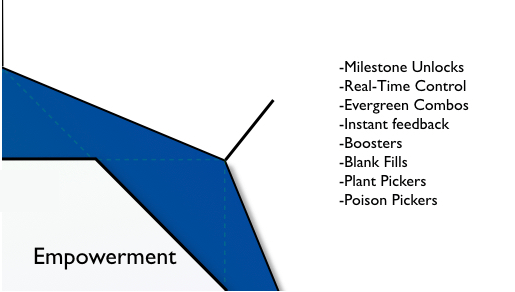
Image from https://yukaichou.com/gamification-examples/octalysis-complete-gamification-framework/
Introduction:
Environmental management in the chemical processing industry often demands innovative solutions to complex challenges. The Octalysis framework, designed by Yu-kai Chou, provides an insightful approach to addressing these challenges. In this blog post, we explore how the “Empowerment of Creativity & Feedback” core drive of the Octalysis framework can be effectively applied to Environment Management Systems (EMS) in chemical processing plants, fostering a culture of innovation and continuous improvement.
Understanding Empowerment of Creativity & Feedback:
The “Empowerment of Creativity & Feedback” drive focuses on engaging individuals by allowing them to express their creativity and see the results of their actions. This core drive is compelling in environments where innovation is crucial, and individuals can benefit from immediate feedback on their ideas.
Application in Environmental Management:
- Idea Generation Platforms: Establish platforms where employees can submit their ideas for environmental improvements. This could be a digital suggestion box or regular brainstorming sessions. The key is to ensure that every idea is acknowledged and considered.
- Rapid Prototyping and Experimentation: Encourage experimentation by setting up small-scale projects or pilot tests for promising ideas. This approach allows for quick feedback and learning, fostering a culture where trial and error are part of the innovation process.
- Feedback Loops: Develop robust feedback mechanisms to inform employees about the outcomes of their ideas and experiments. Whether an idea is implemented, adapted, or not used, constructive feedback is crucial for continuous learning and motivation.
- Collaborative Problem-Solving Workshops: Organize workshops where cross-functional teams solve specific environmental challenges. These workshops should encourage free thinking and collaboration, leveraging the diverse expertise within the plant.
- Recognition and Rewards: Implement a system to recognize and reward creative contributions, regardless of their immediate success. Recognizing effort and creativity is as important as celebrating achievements.
Benefits and Impact:
- Enhanced Innovation: This approach leads to a more innovative mindset among employees, vital for tackling environmental challenges in new and effective ways.
- Increased Employee Engagement: Employees who feel their creative input is valued are more engaged and committed to their work.
- Improved Environmental Performance: By harnessing the collective creativity of the workforce, plants can develop more efficient, sustainable, and cost-effective environmental solutions.
- Culture of Continuous Improvement: Fostering a culture where creativity is encouraged, and feedback is constructive leads to a mindset of continuous improvement.
Conclusion:
Applying the “Empowerment of Creativity & Feedback” core drive from the Octalysis framework to EMS in chemical processing plants can significantly enhance environmental management. By creating an environment where innovation is nurtured and every idea is valued, plants can improve their environmental performance and foster a more engaged and dynamic workforce. This approach goes beyond traditional management practices, positioning chemical processing plants at the forefront of environmental innovation and sustainability.
To learn directly from Yu-Kai’s site:
The information in this article was partially generated by OpenAI’s ChatGPT, an AI language model, and has been reviewed/edited for accuracy and relevance. OpenAI. (2024). ChatGPT [Large language model]. Retrieved from https://chat.openai.com/


 Wee Write
Leave a comment