
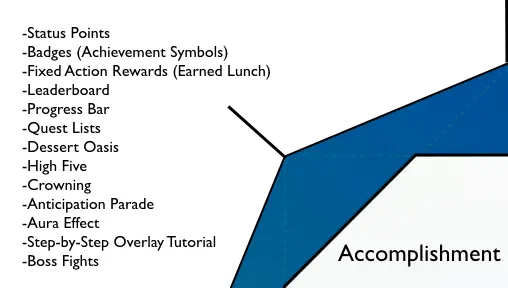
Image from https://yukaichou.com/gamification-examples/octalysis-complete-gamification-framework/.
Introduction
Applying the Octalysis Framework “Development & Accomplishment” to Managing Quality in a Chemical Processing Plant
In the realm of enhancing workplace productivity and employee engagement, the Octalysis Framework, crafted by Yu-kai Chou, stands out for its innovative approach. One of its core drives, “Development & Accomplishment,” is particularly relevant to the challenging environment of a chemical processing plant. This blog post delves into how this principle can be effectively applied to managing quality in such a setting.
Understanding Development & Accomplishment
The drive of Development & Accomplishment is centered around the human desire to make progress, develop skills, and overcome challenges. In a work setting, this translates to the satisfaction employees derive from achieving goals, mastering tasks, and being recognized for their efforts.
Implementing in a Chemical Processing Plant
- Goal Setting: Begin by setting clear, measurable goals for quality management. These goals should be challenging yet achievable, encouraging employees to stretch their abilities. For example, aim for a specific reduction in waste or improvement in product purity.
- Skill Development Programs: Invest in training programs that enhance the skills and knowledge of your employees. This could include advanced training in quality control methods, safety procedures, or the latest technology used in chemical processing.
- Feedback and Progress Tracking: Implement a system where employees receive regular feedback on their performance. Use visual tools like charts or dashboards to track progress towards quality goals, making this information accessible to all employees.
- Recognition and Rewards: Develop a recognition system to celebrate achievements in quality management. Rewards can range from public acknowledgment in meetings to tangible benefits like bonuses or extra leave days.
- Challenging Projects: Assign challenging projects or roles to employees, especially those showing a keen interest in quality management. This could involve leading a team to solve a specific quality issue or working on a new process improvement initiative.
- Career Advancement Opportunities: Link achievements in quality management to career progression within the company. Employees should see a clear path to advancing their careers by contributing to quality improvements.
- Employee Empowerment: Give employees a degree of autonomy to make decisions related to quality management. This could involve allowing teams to develop their own methods for quality testing or to suggest improvements to existing processes.
Challenges and Considerations
- Realistic Goal Setting: Goals should be realistic and attainable to avoid employee frustration or burnout. It’s important to understand the capabilities of your team and set benchmarks accordingly.
- Balancing Routine and Innovation: While focusing on development and accomplishment, it’s vital to balance the innovative aspects with the routine, day-to-day tasks that are essential for plant operation.
- Inclusive Participation: Ensure that all employees, regardless of their role, have the opportunity to participate in these initiatives. This creates a more inclusive environment and broadens the scope of improvement ideas.
Conclusion
Applying the “Development & Accomplishment” core drive of the Octalysis Framework to managing quality in a chemical processing plant can lead to a more engaged, motivated, and productive workforce. By setting clear goals, providing opportunities for skill development, and recognizing achievements, employees become active participants in the quality management process. This not only improves the quality of output but also fosters a culture of continuous improvement and professional growth.
To learn directly from Yu-Kai’s site:
The information in this article was partially generated by OpenAI’s ChatGPT, an AI language model, and has been reviewed/edited for accuracy and relevance. OpenAI. (2024). ChatGPT [Large language model]. Retrieved from https://chat.openai.com/




 Wee Write
Leave a comment