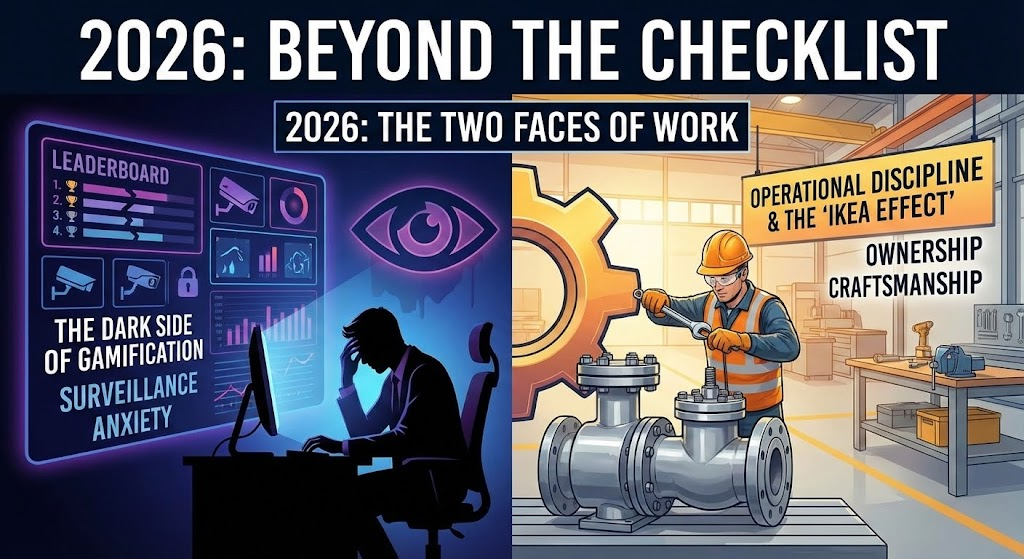
Welcome to 2026.
For the last 24 months, I have been deep in the trenches—brainstorming with AI partners, dissecting industry standards, and observing the real-world friction between “The Procedure” and “The Person.”
We know that compliance is necessary. We know ISO 55001 and ISO 45001 provide the framework. But frameworks don’t turn valves, and standards don’t spot risks. People do.
This year, Wee-Write is pivoting to focus on two explosive themes that sit at the uncomfortable intersection of technical discipline and human psychology.
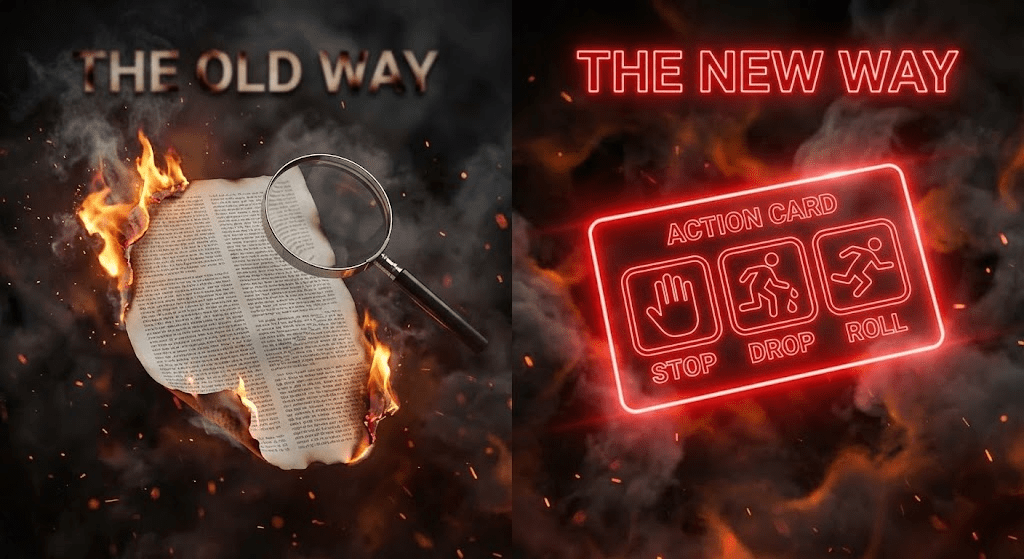
We are moving beyond “Best Practices” to explore why some systems fail despite being perfect on paper, and why others succeed because of “irrational” human behavior.
Here is what you can expect from me on the 1st and 3rd week of every month.
🔧 Week 1: Operational Discipline & The “IKEA Effect” in Asset Care
“Why do we wash our own cars but ignore the plant’s pumps?”
If you have ever assembled a piece of IKEA furniture, you know the truth: We love what we build. This is the IKEA Effect—a cognitive bias where labor leads to love.
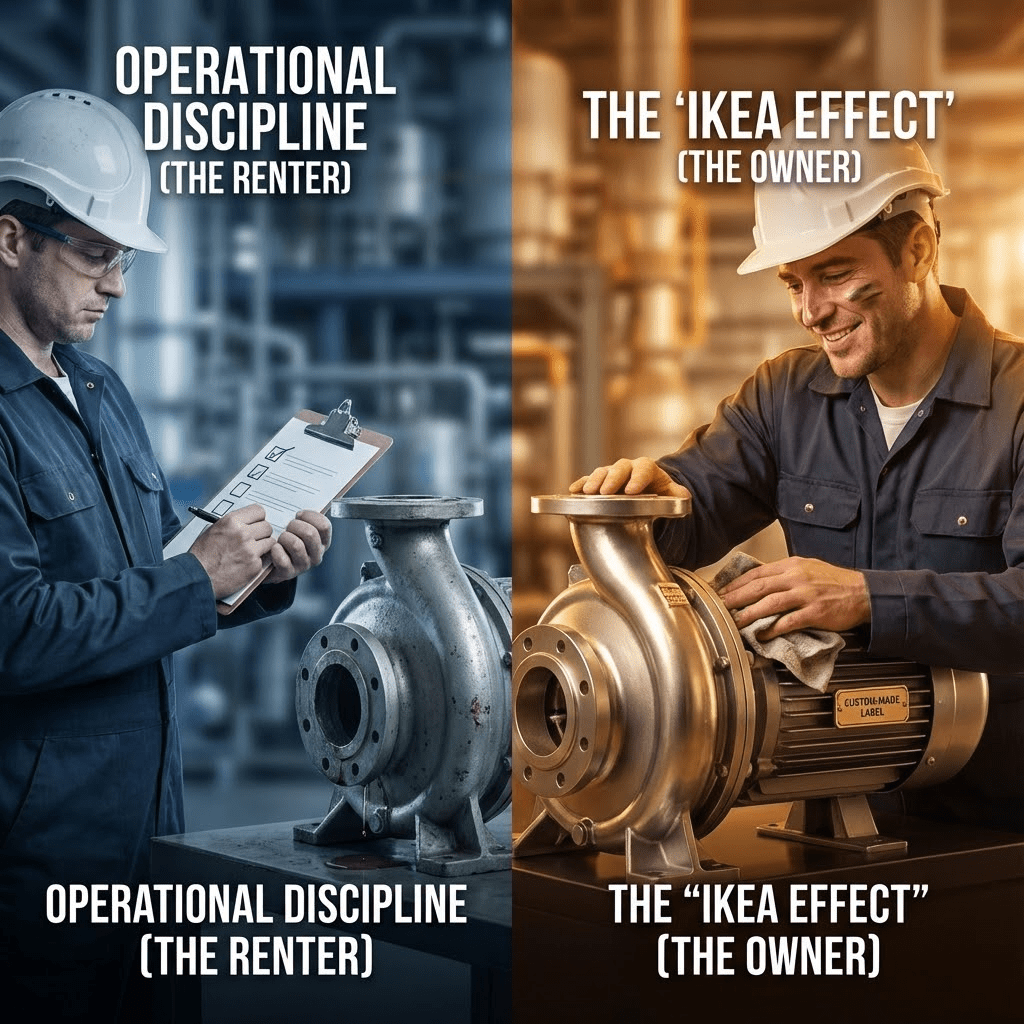
Yet, in Asset Management (ISO 55001), we treat operators like “Renters.” We tell them to run machines they didn’t choose, maintain barriers they didn’t design, and follow procedures they didn’t write. Then we wonder why they walk past a leaking seal without caring.
This series is about flipping the script. It is about using psychology to “convert” your workforce from Tenants into Owners.
What we will explore:
- The Renter vs. The Owner: How to reintegrate “Autonomous Maintenance” to ensure operators catch the small leaks before they become Tier 1 events.
- My Machine, My Masterpiece: Allowing “Safe Customization” of the workspace—visual management and “territory defense”—to trigger deep psychological ownership.
- The “Sweat Equity” of Safety: Why outsourcing 100% of your maintenance kills the sensory loop between the operator and the machine.
- Guardians of the Galaxy (Valves): Moving away from generic “Shift Responsibility” and assigning specific “Avatars” and “Guardian” roles to critical assets.
🌑 Week 3: The Dark Side of Corporate Gamification
“When points and badges become surveillance and shame.”
We have all heard that gamification is the future of engagement. HR tech vendors promise us that if we add a leaderboard to the audit process, productivity will soar.

But they are wrong.
When applied without ethical guardrails, gamification doesn’t just fail; it backfires. It triggers the darker parts of human psychology—anxiety, tribalism, and the urge to cheat. In this series, we will strip away the glossy marketing of “Employee Engagement” and look at the psychological collateral damage of poorly designed systems.
What we will explore:
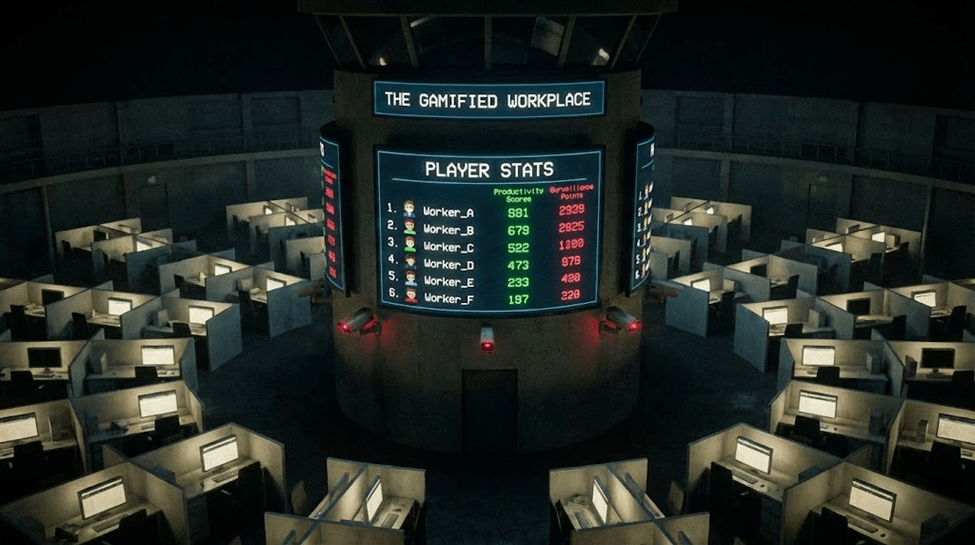
- The Gamified Panopticon: When “Player Stats” stop being fun and start looking like digital surveillance, creating a prison where employees are constantly watched.
- The Cobra Effect in Audit: How rewarding the discovery of errors (rather than the prevention of them) turns your workforce into “cobra breeders” who manufacture problems just to fix them for points.
- Weaponized Peer Pressure: How “Team Leaderboards” can destroy psychological safety by turning colleagues into cruel enforcers.
- The “Mandatory Fun” Paradox: Why forcing employees to participate in “engagement activities” is the fastest way to breed cynicism.
We will use the Octalysis Framework to diagnose these toxic mechanics and show you how to design games that empower, rather than exploit.
The Vision for 2026
We are done with dry theory. This year is about the synthesis of the hard and the soft.
We will take the rigid requirements of ISO Standards and inject them with the messy, powerful reality of Organizational Psychology.
Get ready to look at your dashboard—and your wrench—differently.
Stay tuned.
- First Post Drops: Week 1, January 2026.


 Wee Write
Leave a comment