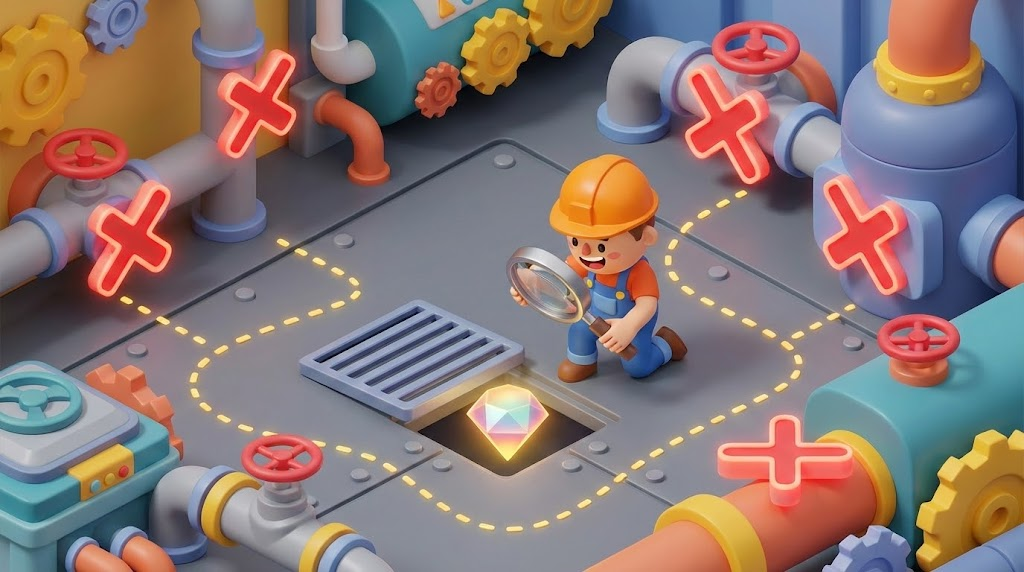
There is a dirty secret in the safety world. It is called “Pencil Whipping.”
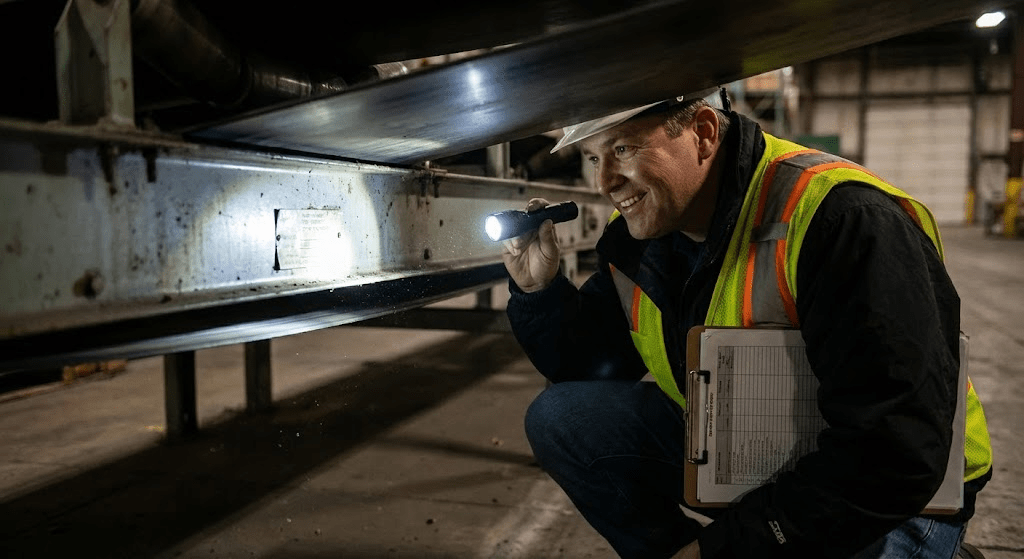
It happens when an employee takes a safety checklist, walks down the aisle, and rapidly ticks “Safe, Safe, Safe, Safe” without actually looking at anything.
They aren’t being malicious. They are being human.
When you ask a human to do the exact same inspection, of the exact same area, for the 100th day in a row, their brain enters “Auto-Pilot.” Their Reticular Activating System (the part of the brain that filters information) tunes out the environment. They literally cannot see the hazards anymore.
The audit becomes a boring chore driven by Core Drive 8: Loss & Avoidance (doing it just to avoid getting in trouble).
To wake up their brains, you need to turn off the “Routine” and turn on the “Hunt.” You need to apply Core Drive 7: Unpredictability & Curiosity.
You need to stop running Audits and start running Scavenger Hunts.
The Psychology: Policeman vs. Hunter
Traditional safety audits frame the employee as a Policeman.
- Goal: Enforce rules.
- Mindset: “I hope I don’t find any problems because that means paperwork.”
A Scavenger Hunt frames the employee as a Hunter.
- Goal: Find the prize (the risk).
- Mindset: “I hope I find something, because finding things feels good.”
Evolutionarily, humans are wired to hunt. When we search for berries or game (or Easter Eggs), our brain releases dopamine during the search and a bigger hit upon discovery.
We can hack this dopamine loop to improve safety compliance.
How to Gamify the Safety Walk
You don’t need an expensive app to do this. You just need to change how you frame the task.
1. The “Golden Snitch” (Salting the Mine)
This is the oldest trick in the quality control book, but it works.
Before the safety walk begins, the Safety Manager deliberately plants a harmless “Hazard” in the zone.
- Place a red tag on the floor.
- Leave a (clean/empty) cup on a ledge where it shouldn’t be.
- Turn a non-critical gauge upside down.
Tell the team: “I have hidden 3 specific violations in Zone B. Go find them.”
Suddenly, they aren’t looking at the floor to check a box; they are scanning every inch of the floor to “win the game.” In the process of looking for the fake hazards, they will inevitably spot the real ones.
2. The “Theme” Hunt
Cognitive fatigue sets in when we look for “everything.”
Instead of a generic “Safety Audit,” run themed Scavenger Hunts that rotate weekly.
- Week 1: The Trip Hazard Hunt. (Ignore electrical; look only at the floor).
- Week 2: The “Expired Tag” Hunt. (Look only at inspection dates).
- Week 3: The Leak Hunt. (Look only for drips).
By narrowing the scope, you sharpen the focus. You turn the audit into a sniper mission rather than a shotgun blast.
3. Bounty Hunters
Create a “Bounty Board” in the breakroom.
Instead of punishing people for finding non-conformances (which creates a culture of silence), reward them.
- “Wanted: The Oldest Fire Extinguisher Tag in the Plant.”
- “Wanted: A photo of a hose creating a trip hazard.”
When an operator finds a risk, they don’t feel like a snitch; they feel like a Bounty Hunter cashing in a ticket. They get “Social Currency” (recognition) and a small reward (coffee, early leave, etc.).
Conclusion: Curiosity Cures Complacency
Routine is the enemy of safety.
If your team knows exactly what the audit checklist looks like, they will stop looking at the plant.
Inject chaos. Inject curiosity. Make them wonder what they are looking for today.
When you turn the boring task of “Compliance” into the engaging game of “Discovery,” you stop getting Pencil Whipped checklists.
You start getting a safer plant.
Next Step:
For your next safety walk, do not hand out the standard checklist.
Instead, give the team a sticky note that says: “Find me 3 things that are yellow and broken.”
Watch how much harder they look.
The information in this article was partially generated by Google’s Gemini, an AI language model, and has been reviewed/edited for accuracy and relevance.



 Wee Write
Leave a comment