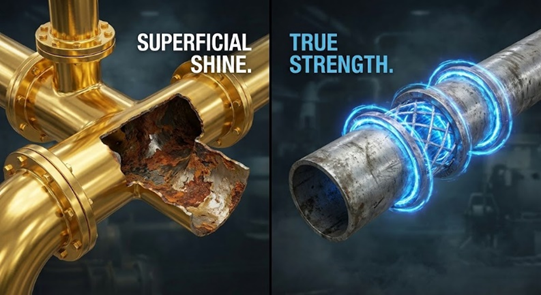
There is an old nautical phrase: “Polishing the brass on the Titanic.” It refers to doing futile, superficial work while a catastrophe unfolds beneath you.
In the world of industrial manufacturing, we see a version of this every day. We call it “Audit Preparation.”
Three days before a major external audit, the plant goes into a frenzy. We paint the handrails. We scrub the floors. We zip-tie the loose cables. When the auditors arrive, the plant looks immaculate.
But ISO 55001 (Asset Management) doesn’t care if your plant is shiny. It cares if it is sound.
Too often, corporate “Housekeeping” programs drive the wrong behavior. They utilize Octalysis Core Drive 8: Avoidance (fear of a bad audit score) to force operators to focus on aesthetics—polishing the brass. Meanwhile, the structural integrity of the vessel—the stuff that actually keeps the product in the pipe—is neglected because it’s harder to clean and easier to ignore.
Here is how to shift your culture from “Hygiene” to “Health.”
The “Fresh Paint” Paradox
In many Asset Care protocols (including those for long-term assets like industrial chimneys or marine jetties), fresh paint is actually a risk factor.
Why? Because paint hides secrets.
If an operator is incentivized purely on the visual appearance of their zone, they will paint over rust. They will paint over spalling concrete. They will paint over stress fractures.
- The Technical Reality: According to structural integrity standards, the most critical defects are often subtle—micro-cracks in a foundation or “rust jacking” on a flange.
- The Behavioral Fix: Stop rewarding “New Paint.” Reward “Exposed Truth.”
- Gamification Shift: Change the win-condition. Instead of giving points for the cleanest zone, give points for the team that identifies the most structural anomalies. Make it a badge of honor to find a crack that was hiding in plain sight.
From “Housekeeping” to “Asset Keeping”
“Housekeeping” implies chores. It’s sweeping the kitchen. It’s low-value work.
“Asset Keeping” implies stewardship. It’s maintaining a legacy.
To trigger Core Drive 4: Ownership, we need to change the language and the lens.
- The Old Way: “Sweep this pump pad because the Regional Manager is coming.”
- The New Way: “Inspect the base bolts on this pump because vibration is the enemy of reliability.”
When an operator wipes down a machine, it shouldn’t be to remove dust. It should be a tactile inspection. This is the difference between a janitor and an engineer. When you touch the machine to clean it, you are feeling for heat, for loose fittings, for vibration.
Visual Management of Function, Not Form
A shiny gauge that reads zero is useless. A dirty gauge that reads accurate pressure is critical.
Your Visual Management systems should highlight function, not just form.
- Don’t just color-code for looks: Use “Slippage Marks” (torque stripes) on critical bolts. This is a visual aid that looks messy to the untrained eye but tells the operator instantly if a bolt has loosened.
- The Chimney Analogy: Consider your plant’s exhaust stacks. They are often ignored until they fail because they are hard to reach. A “Polishing the Brass” culture ignores them because they are out of sight. A “Pride” culture uses high-zoom photography or drone inspections to visually manage the top of the stack, displaying the photos on the shop floor.
The Bottom Line
If your safety walks are just “cleanliness audits,” you are training your teams to hide problems. You are teaching them that a clean plant is a safe plant. That is a lie.

A safe plant is one where the operators know exactly where the corrosion is, exactly which pump is vibrating, and exactly when the next bearing change is due.
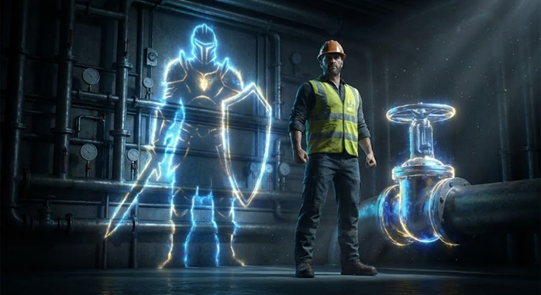
Stop asking them to polish the brass. Ask them to check the hull.
Don’t paint over the cracks. Own them.
The information in this article was partially generated by Google’s Gemini, an AI language model, and has been reviewed/edited for accuracy and relevance.

Leave a Reply