We have all heard “The Thump.”
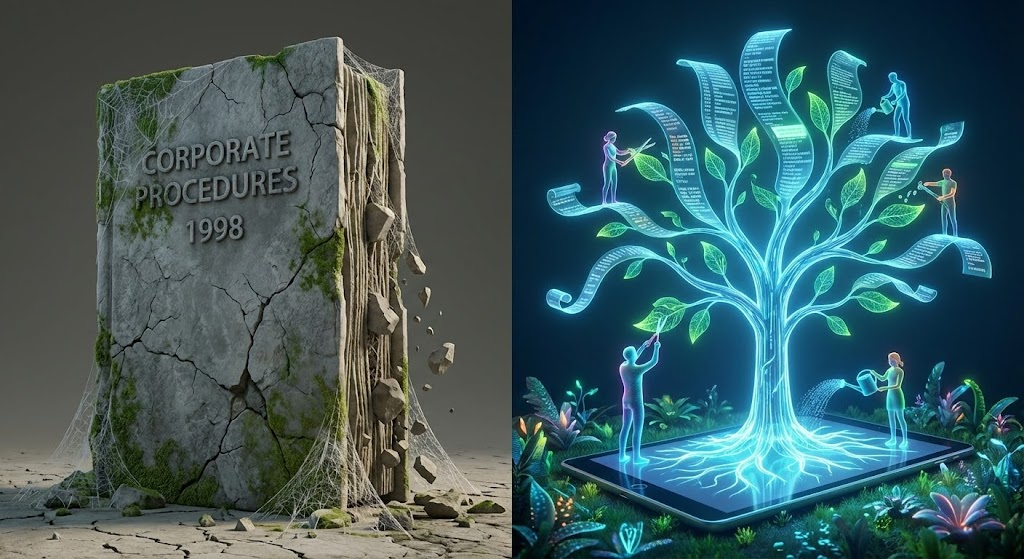
It is the sound of a 400-page Business Continuity Plan (BCP) being dropped onto a boardroom table. It is heavy, impressive, and perfectly formatted. It satisfies the external auditor. It gets you your ISO 22301 certification.
And if a fire actually breaks out, it is the most useless object in the room.
In fact, that binder is a hazard. It creates a false sense of security. It convinces leadership that because they have a document, they have a plan.
But in the complex, dynamic reality of a chemical plant or a supply chain, a plan that hasn’t been updated in 12 months isn’t a safety net; it’s a hallucination.
Here is why your static BCP is failing, and how to use the psychology of Ownership to bring it back to life.

The Psychology: The “Fear” Binder
Most BCPs are written under the influence of Octalysis Core Drive 8: Loss & Avoidance1. We write them because we have to. We write them to avoid a Non-Conformance Report (NCR) or a regulatory fine.
When motivation is based on fear/avoidance, the goal is “Minimum Viable Compliance.” We do just enough to get the auditor to leave us alone. Once the stamp is acquired, the binder goes on the shelf, and the “Sunk Cost Fallacy” sets in2. We are terrified to change it because “it’s already approved.”
The Reality Gap: Paper vs. Plant
While your binder sits on the shelf gathering dust, your plant changes.
- A pump is bypassed.
- A software update changes the login screen for the SCADA system.
- The “Emergency Muster Point” is blocked by temporary scaffolding.
When the crisis hits—the flood, the cyberattack, the power outage—your team opens the binder and finds instructions for a plant that no longer exists.
The Fix: From “Artifact” to “Open Source”
To fix this, we need to shift from Core Drive 8 (Fear) to Core Drive 4: Ownership & Possession3.
We need to apply the IKEA Effect4. Humans undervalue what is given to them, but they irrationally overvalue what they build.
If you want a BCP that actually works, you need to stop treating it like a sacred text written by consultants, and start treating it like “Open Source Code” maintained by the users.
1. The “Wiki” Approach to Clause 7.5
ISO 22301 Clause 7.5 requires “Documented Information,” but it doesn’t say that information must be static.
- The Shift: Move your tactical response plans (not the high-level policy) to a digital, wiki-style platform.
- The Tactic: Give every operator and engineer “Edit Rights” to the recovery procedures for their specific zone.
- The Psychology: When an operator sees a mistake in the shutdown procedure, they don’t just complain about “Management’s Plan.” They fix their plan. They “Commit the Update.”
2. Reward the “Patch,” Not Just the Plan
In software development, you are rewarded for finding bugs. In Business Continuity, we usually punish people for finding gaps because it means “more work.”
- The Gamification: Create a “Bug Bounty” for your BCP.
- The Action: If a technician realizes that the backup generator key is no longer kept in the Control Room, and they update the BCP to reflect the new location, reward them.
- The Result: You turn your workforce into active curators of resilience. They are checking the plan not because an auditor is coming, but because they want their “Build” to be accurate5.
3. The New Metric: “Staleness”
Stop measuring “Percentage of Plans Reviewed Annually.” That is a vanity metric.
Start measuring “Plan Staleness.”
- How many days has it been since this specific recovery procedure was edited?
- If a procedure hasn’t been touched in 365 days, it is likely dead.
- If it was updated yesterday by the Shift Supervisor, it is alive.
Conclusion: Burn the Binder
Resilience is not a document; it is a capability.
A capability must be exercised, updated, and owned by the people on the ground.
If your BCP is too precious to be scribbled on, formatted, and rewritten by the night shift crew, it isn’t a plan. It’s a paperweight.
Next Step:
Go to your BCP binder today. Open a random recovery procedure. Walk to the shop floor and ask the operator: “Is this exactly how you would do it today?”
If the answer is “No,” hand them a red pen. Let them own it.
The information in this article was partially generated by Google’s Gemini, an AI language model, and has been reviewed/edited for accuracy and relevance.




Leave a Reply