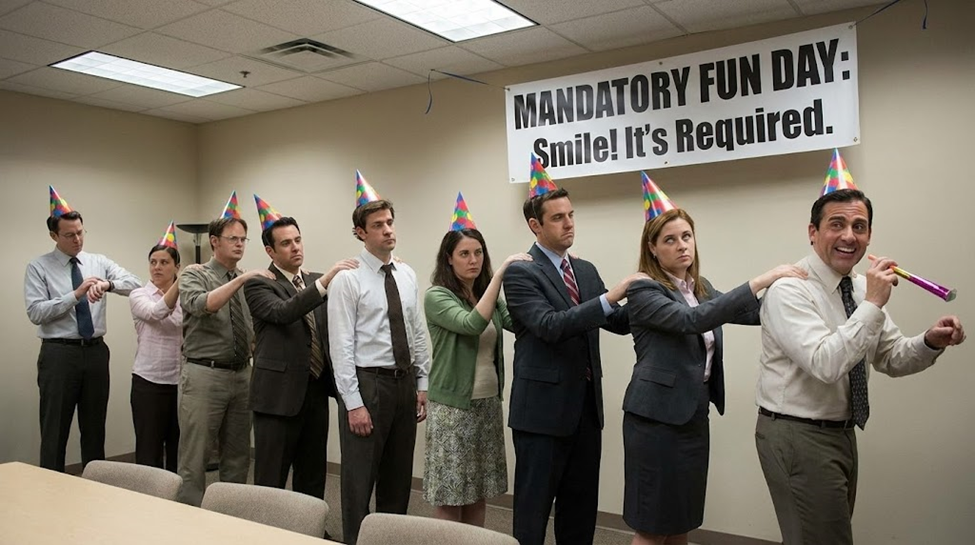
There is perhaps no phrase in the corporate lexicon more dread-inducing than “Mandatory Fun.”
It’s the required team-building scavenger hunt when everyone is drowning in deadlines. It’s the gamified sales platform that forces grown adults to earn “experience points” for basic data entry. It is the attempt by leadership to legislate morale, to turn engagement into a compliance activity.
The paradox, of course, is that the harder a company tries to force employees to have fun, the more miserable they become.
True engagement, like true play, is voluntary. When you remove the element of choice from gamification, you don’t get an engaged workforce. You get a cynical one, performing the theater of engagement while mentally checking out.
Here is a breakdown of the paradox through the lenses of psychology, cultural impact, and the inevitable “cheating” that follows.
The Psychology: The Death of Autonomy
At the core of human motivation—and the Octalysis Framework—is Core Drive 3: Empowerment of Creativity & Feedback, which is heavily reliant on Autonomy. We want to feel like we are in control of our actions.
The moment an activity becomes mandatory, autonomy dies.
When a gamified system is forced upon employees—”You must log in daily to spin the Wheel of Wellness”—it ceases to be a game. Psychologically, it is re-categorized in the brain from “potential leisure” to “obligation.”
This is insulting to serious professionals. An experienced Operations Manager or Internal Auditor doesn’t need a digital badge to feel good about doing their job well. Forcing them to participate in infantilizing game mechanics feels patronizing. It signals that management doesn’t view them as responsible adults driven by intrinsic mastery, but as children needing to be bribed with digital candy. The result isn’t joy; it’s resentment.
The Culture: The Theater of Engagement
When fun is mandated, organizational culture splits into two realities: The Official Narrative vs. The Shop Floor Reality.
On the surface, reports show high participation rates in the new gamified initiative. HR slides show smiling stock photos and impressive engagement metrics.
Below the surface, a deep current of cynicism takes hold. The culture becomes one of “eye-rolling compliance.” Employees bond not through the game, but through shared mutual disdain for the game. They participate only enough to avoid being flagged as “not a team player.”
This corrodes trust. Leadership, looking at their flawed dashboards, congratulates themselves on a successful culture initiative. Meanwhile, the staff sees leadership as hopelessly disconnected from the actual grinding reality of the work. The “Mandatory Fun” initiative becomes a visible symbol of that disconnect, creating an “Us vs. Them” dynamic between management and the workforce.
The Cheating: Malicious Compliance and the “Tick-Box”
How do you “cheat” at mandatory fun? You don’t cheat to win; you cheat to exert the absolute minimum amount of emotional energy required to be left alone.
This is the realm of malicious compliance.
If a gamified system requires employees to “post a motivational thought” on the company intranet once a week to maintain their status, they won’t post something meaningful. They will copy-paste the first quote they find on Google, tick the box, and get back to real work.
If they have to attend a gamified virtual town hall, they log in, turn off their camera and microphone, and do their emails in another window.
The “cheat” here is the hollow victory of participation over substance. The system achieves its metric—100% attendance! 500 motivational posts!—but it completely fails its ultimate goal of genuine engagement. The workforce turns the game into the very thing it was meant to replace: a soulless, bureaucratic tick-box exercise.
Conclusion: Engagement Cannot Be Conscripted
You cannot mandate enthusiasm. You cannot conscript joy.
Effective gamification must invite participation, not demand it. It must lean on Intrinsic motivation—helping people see the meaning in their work (CD1), giving them autonomy to solve problems their way (CD2 & CD3), and fostering genuine connection (CD5).
If your engagement strategy relies on the word “mandatory,” it has already failed. Stop trying to force fun, and start trying to remove the friction that makes work miserable in the first place.




Leave a Reply