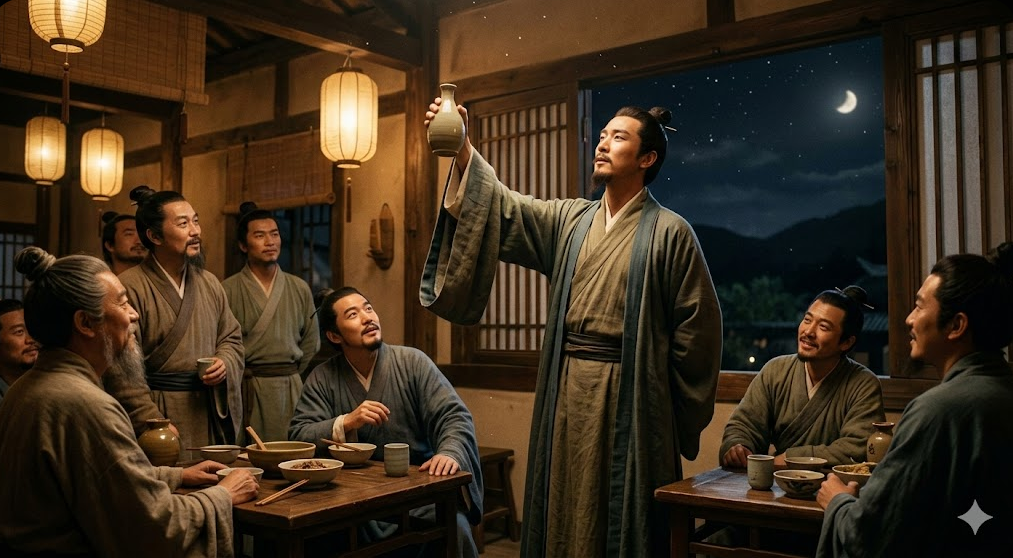
君不见,黄河之水天上来,奔流到海不复回。
君不见,高堂明镜悲白发,朝如青丝暮成雪。
人生得意须尽欢,莫使金樽空对月。
天生我材必有用,千金散尽还复来。
烹羊宰牛且为乐,会须一饮三百杯。
岑夫子,丹丘生,将进酒,杯莫停。
与君歌一曲,请君为我倾耳听。
钟鼓馔玉不足贵,但愿长醉不复醒。
古来圣贤皆寂寞,惟有饮者留其名。
陈王昔时宴平乐,斗酒十千恣欢谑。
主人何为言少钱,径须沽取对君酌。
五花马,千金裘,呼儿将出换美酒,与尔同销万古愁。
Key Themes & Explanations
1. The Perspective of Time
The opening lines use the Yellow River and the mirror to contrast the eternal nature of the universe with the fleeting span of human life. The metaphor of hair turning from “silk” (youthful black) to “snow” (old age white) in a single day is a classic Li Bai hyperbole.
2. Radical Optimism
The line “Heaven produced my talents, they must be of use” (天生我材必有用) is one of the most quoted sentences in Chinese history. It reflects Li Bai’s supreme self-confidence, even in the face of political failure. He believes that value is inherent, not granted by an Emperor.
3. Contempt for Worldly Status
Li Bai mentions “Bells, drums, and jade delicacies”—symbols of high office and wealth—only to dismiss them. He argues that even the greatest “saints and sages” are lonely or forgotten, while “drinkers” (those who truly lived with passion) are remembered.
4. The Prince of Chen
He references Cao Zhi (the Prince of Chen), a famous poet-prince who was also brilliant but politically suppressed. By identifying with Cao Zhi, Li Bai justifies his own extravagant spending and drinking as the behavior of a misunderstood genius.
Original Text, Pinyin, and Translation
| Chinese (Simplified) | Pinyin | English Translation |
| 君不见,黄河之水天上来 | Jūn bùjiàn, Huánghé zhī shuǐ tiānshàng lái | Do you not see the Yellow River’s waters come from the sky, |
| 奔流到海不复回。 | Bēnliú dào hǎi bù fù huí. | Rushing to the sea, never to return? |
| 君不见,高堂明镜悲白发 | Jūn bùjiàn, gāotáng míngjìng bēi bāifà | Do you not see in the great hall’s mirrors, the sorrow of white hair, |
| 朝如青丝暮成雪。 | Zhāo rú qīngsī mù chéng xuě. | At dawn like black silk, by evening turned to snow? |
| 人生得意须尽欢 | Rénshēng déyì xū jìn huān | In life, when happy, one must enjoy to the fullest, |
| 莫使金樽空对月。 | Mò shǐ jīnzūn kōng duì yuè. | Never let the golden goblet face the moon empty. |
| 天生我材必有用 | Tiānshēng wǒ cái bì yǒuyòng | Heaven produced my talents, they must be of use, |
| 千金散尽还复来。 | Qiānjīn sàn jìn hái fù lái. | A thousand gold pieces scattered will all come back again. |
| 烹羊宰牛且为乐 | Pēng yáng zǎi niú qiě wéi lè | Cook the sheep, slaughter the ox, and make merry, |
| 会须一饮三百杯。 | Huì xū yī yǐn sānbǎi bēi. | We must drink three hundred cups in a single bout! |
| 岑夫子,丹丘生 | Cén fūzǐ, Dānqiū shēng | Master Cen! Master Danqiu! |
| 将进酒,杯莫停。 | Qiāng jìn jiǔ, bēi mò tíng. | Bring in the wine! Let the cups not stop! |
| 与君歌一曲 | Yǔ jūn gē yī qū | I will sing a song for you, |
| 请君为我倾耳听。 | Qǐng jūn wèi wǒ qīng’ěr tīng. | Please, lend me your ears. |
| 钟鼓馔玉不足贵 | Zhōng gǔ zhuàn yù bùzú guì | Bells, drums, and jade delicacies are not worth prizing, |
| 但愿长醉不复醒。 | Dàn yuàn cháng zuì bù fù xǐng. | I only wish to be forever drunk and never wake. |
| 古来圣贤皆寂寞 | Gǔlái shèngxián jiē jìmò | Sages and saints of old are all forgotten now, |
| 惟有饮者留其名。 | Wéiyǒu yǐnzhě liú qí míng. | Only the great drinkers have left their names behind. |
| 陈王昔时宴平乐 | Chén wáng xīshí yàn Pínglè | The Prince of Chen once feasted at Pingle Temple, |
| 斗酒十千恣欢谑。 | Dǒu jiǔ shí qiān zì huān xuè. | Ten thousand coins for a cask of wine, laughing with abandon. |
| 主人何为言少钱 | Zhǔrén héwéi yán shǎo qián | Why should a host say he has little money? |
| 径须沽取对君酌。 | Jìng xū gū qǔ duì jūn zhuó. | Go directly and buy more to pour for my guests! |
| 五花马,千金裘 | Wǔhuā mǎ, qiānjīn qiú | My dappled horse, my furs worth a thousand gold, |
| 呼儿将出换美酒 | Hū ér jiāng chū huàn měijiǔ | Call the boy to take them out and trade them for fine wine, |
| 与尔同销万古愁。 | Yǔ ěr tóng xiāo wàngǔ chóu. | And together we shall drown the sorrows of ten thousand ages. |
This poem is by Li Bai but the translation and narratives were by Gemini, prompted by Edward Wee.




Leave a Reply