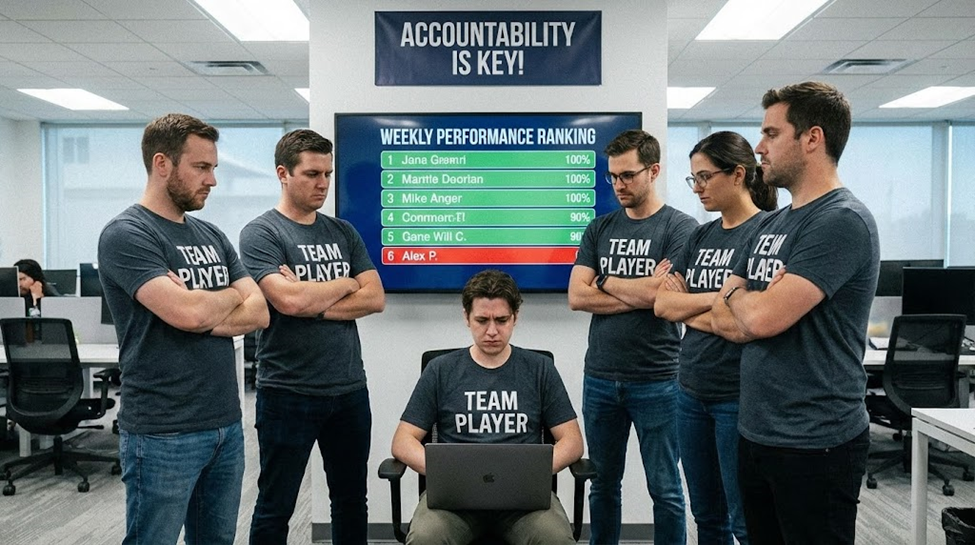
In the Octalysis Framework, Core Drive 5: Social Influence & Relatedness is a powerhouse. It drives everything from mentorship and collaboration to competition and tribalism. When designed well, it creates high-performing teams that lift each other up.
But when designed poorly in a corporate setting, Core Drive 5 doesn’t create a Dream Team; it creates a mob.
Many corporate gamification attempts try to “force” collaboration by tying rewards and punishments to group performance. The logic seems sound: “If they all win together or lose together, they’ll help each other.”
In high-pressure environments like operations floors, audit teams, or supply chain logistics, this often backfires. Instead of fostering support, the system weaponizes peer pressure, turning colleagues into cruel enforcers and transforming “team spirit” into toxic workplace bullying.
Here is an analysis of how Social Influence goes dark through the lenses of psychology, culture, and cheating.
The Psychology: The Primal Fear of Being the “Weakest Link”
The psychology behind weaponized CD5 is rooted in our most primal social instinct: the fear of ostracism.
When a gamified system is set up where an entire team loses their bonus (or misses out on the “Gold Status” pizza party) because one person made a mistake or worked slower, the psychological safety of the group evaporates.
The motivation shifts from “pursuing success” to “avoiding being the scapegoat.” The anxiety of being identified as the “weakest link” is paralyzing. This design doesn’t motivate the struggling employee to improve; it induces panic. Furthermore, it empowers more aggressive personalities on the team to use shame and intimidation under the guise of “holding teammates accountable.”
The game mechanic essentially outsources management’s dirty work to the peers, using social terror as a motivator.
The Culture: Internal Policing Over Mentorship
A culture driven by weaponized peer pressure shifts rapidly from collaborative to punitive.
Imagine a production line gamified for speed. A new employee joins and naturally works slower while learning the ropes, dragging down the team’s average “points.” In a healthy culture, veterans would mentor the rookie.
In a weaponized CD5 culture, the rookie is viewed as a threat to the team’s standing. Mentorship is replaced by hostility. “Hurry up, you’re killing our score,” becomes the standard greeting. The culture becomes exclusionary; teams actively try to reject “slow” members or gang up on those who prioritize thoroughness over speed (like a diligent safety auditor slowing down a rushed production team).
The result is a fragmented, hostile workplace where trust is non-existent and everyone is looking over their shoulder for the next internal attack.
The Cheating: Collusion and The “Wall of Silence”
When the pressure to win as a group becomes unbearable, the group will find ways to win that have nothing to do with actual performance. The cheating shifts from individual hacks to collective conspiracy.
This is most dangerous in Safety and Internal Audit.
If a team’s “Safety Score” gets reset to zero if anyone reports a near-miss incident, the gamification has just incentivized a cover-up. The team will apply immense social pressure on an injured colleague not to report it, so the team keeps their streak alive.
The “cheat” here is the collective suppression of truth. The gamified system builds a “Blue Wall of Silence,” where protecting the team’s leaderboard ranking becomes more important than protecting a colleague’s physical well-being or the company’s regulatory compliance.
Conclusion: Design for Support, Not Shame
Core Drive 5 is like nuclear energy: incredibly powerful, but disastrous if not contained with ethical safety protocols.
When designing team-based gamification, we must ensure that the mechanics encourage collaborative problem-solving rather than collective punishment. If your gamified system is making grown adults afraid of their own desks, you haven’t built a game. You’ve just automated bullying.




Leave a Reply